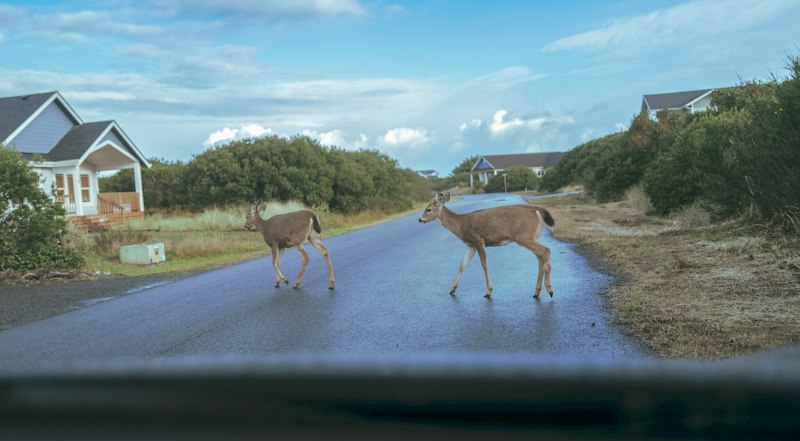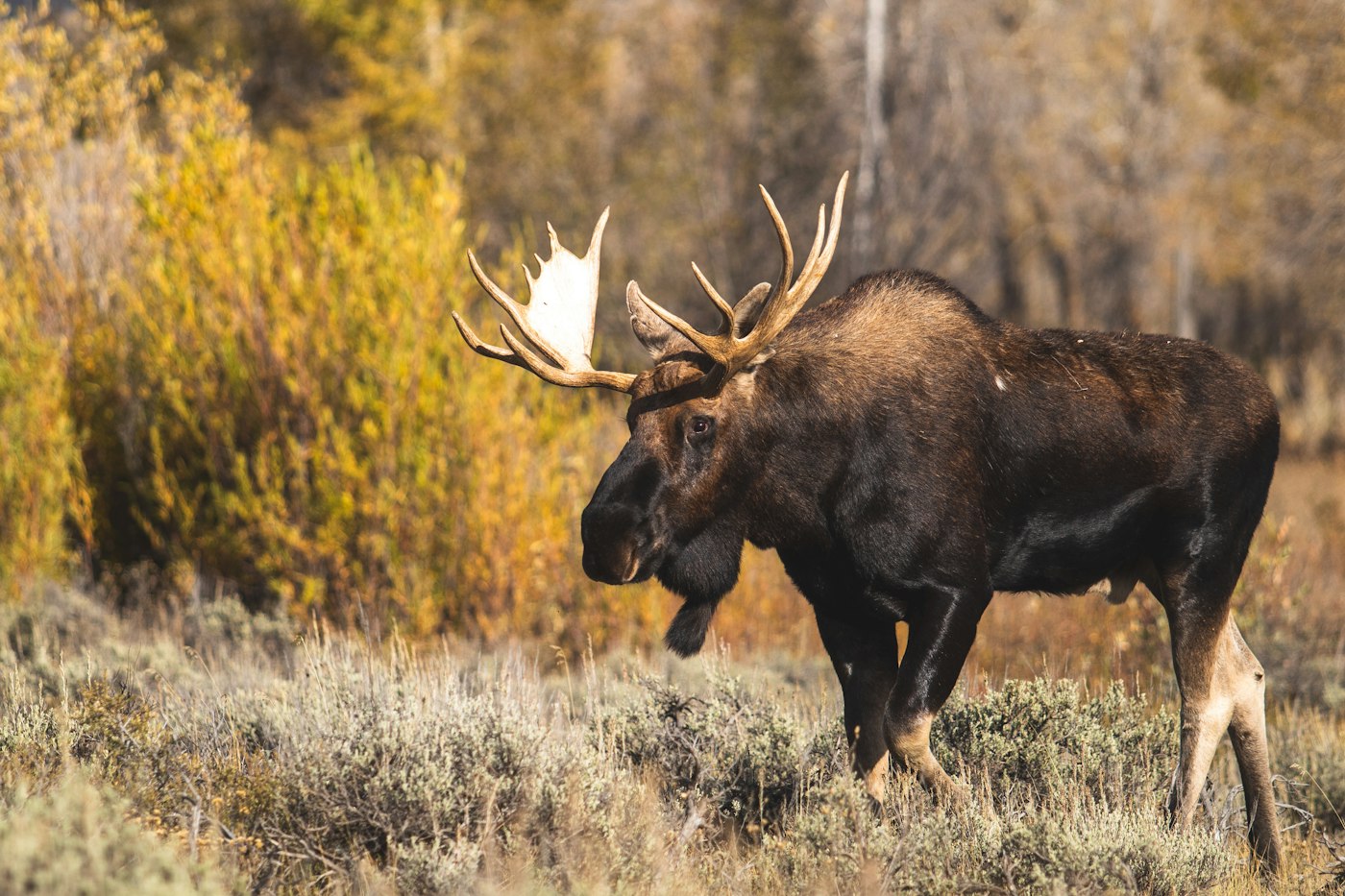
Visitors driving north in October tend to worry about the wrong thing. They plan for traffic on the Kancamagus and full parking lots in Franconia Notch, then find themselves on a dark stretch of Route 3 at 6:30 PM with something enormous standing in the lane. Moose collisions in New Hampshire are far rarer than they were a generation ago, but they are still among the most serious crashes a driver can have here. Closer to home, deer season is just getting started.
This guide covers when and where the risk is highest, how to drive through it, and what to do if the worst happens while you’re in a rental. We’re a rental company in Derry. Many of our customers are heading north this month, and these are the questions we’d want answered before handing over the keys.
The short version: slow down at dawn and dusk, use your high beams whenever you can, and look for legs, not eyes. If a moose is in the road, stop and wait. If you hit an animal, get somewhere safe, call 911 if anyone is hurt or the road is blocked, and then call us at (603) 661-2672, any hour.
When and where moose collisions in New Hampshire happen
According to NH Fish and Game’s Brake for Moose program, moose are very active from April to November, and that is when the highest numbers of collisions occur. Two seasons stand out. In spring, yearlings have just been pushed out on their own and turn up anywhere. In fall it’s the mating season, and moose are on the move. Most collisions happen at dawn or dusk, though they can happen at any time of day.
Fish and Game’s own population assessment puts moose-vehicle collisions highest in the North Country and the White Mountains. Route 3 through Pittsburg, up near the Canadian border, is known as Moose Alley for a reason. They can and do happen elsewhere, though, on highways and backroads alike.
Why a moose is not just a big deer
Hitting a deer is usually a damaged front end. Hitting a moose is a different kind of crash, for reasons Fish and Game spells out plainly:
- The height. A moose stands on long legs, so a bumper hits below the body. In a collision, the bulk of the animal comes down on the windshield and roof.
- The camouflage. Headlights often pick out only the legs, which are close to the colour of the pavement.
- No eye shine. Moose eyes reflect light, but they’re too high for your low beams to reach. Don’t wait for the glint you’d get from a deer.
- The behaviour. Moose are unpredictable. One standing in the road may stay there, wander toward you or bolt the wrong way.
| Moose | Deer | |
|---|---|---|
| Where | Mostly the North Country and White Mountains | Statewide, including southern NH suburbs |
| Peak season | April to November | Mid-October through November |
| What you see first | Dark legs on dark pavement | Eye shine on the shoulder |
| Best move | Brake, stop and wait | Brake, and expect a second deer |
Deer season in southern New Hampshire
You don’t have to drive to Pittsburg for any of this to matter. NH Fish and Game estimates about 1,200 deer-vehicle collisions in a typical year, and almost a third of them happen from mid-October through the end of November, when the rut has deer moving and paying no attention to traffic. That is the next eight weeks.
It lines up badly with the calendar. Daylight saving time ends on Sunday, November 1, and the evening commute on Route 102, Route 28 and the back roads of Londonderry and Windham suddenly happens in the dark. Deer are creatures of habit. Where you saw one cross last week is where you’re likely to see one again, and a doe crossing the road is often followed by her fawns or a buck.